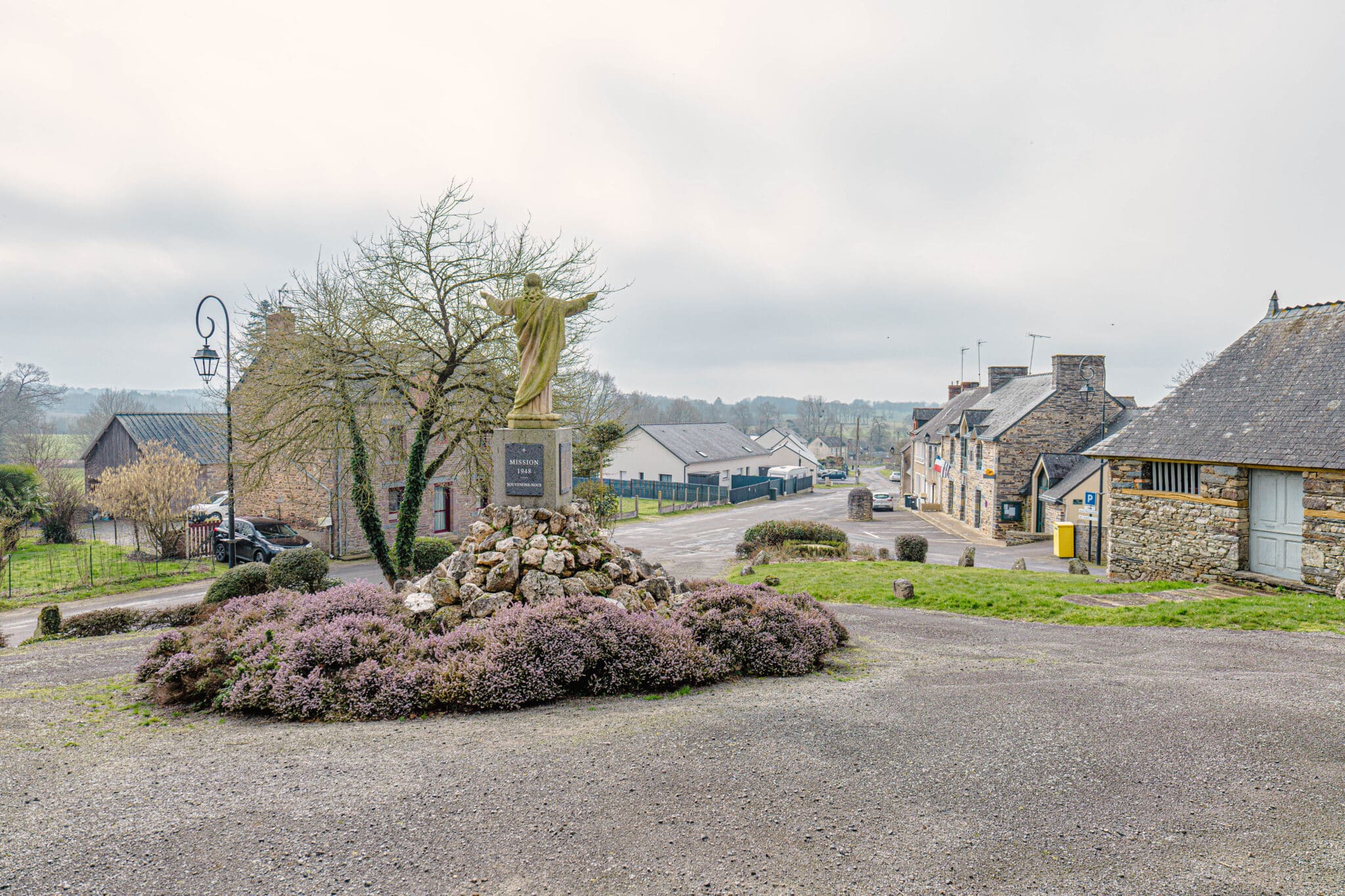
In the north of the Pays de Redon, this small Breton commune is nestled between hedged farmland, rivers and heritage. Here, you can breathe in the fresh air of the Breton countryside. Typical houses tell the story of centuries of history. Starting with Saint-Michel church (17th century) and its famous ossuary.
Between gentle hills and greenery, walkers will enjoy living in an intimate Brittany, far from the crowds, where the peacefulness of the surroundings invites you to take a walk in the local nature.
history
& heritage
Bruc comes from the Gallic word bruca, meaning heather.
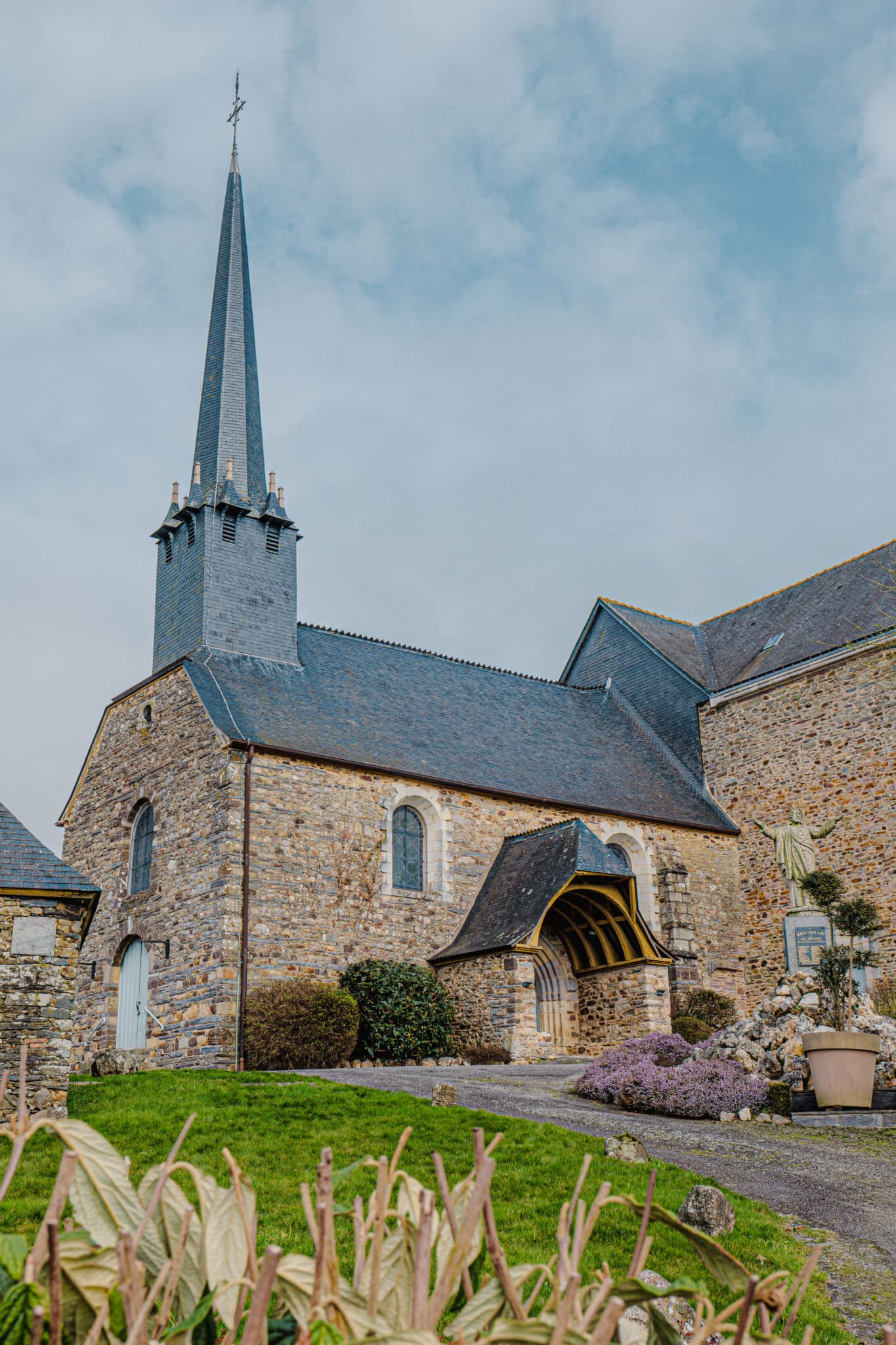
- Saint-Michel Church : Saint-Michel Church, dating from the XVIIᵉ century, reflects several construction eras. Its bell tower was erected between 1761 and 1763, the choir and transept date from 1884, while the nave retains a XVIᵉ century porch and two chapels added in 1824. Formerly owned by the abbeys of Saint-Méen and then Paimpont, it once housed the burials of local priors, rectors and lords. Among its treasures are an octagonal granite baptismal font and a magnificent silver-embossed processional cross, made in 1644 by Rennes silversmith Hiérosme Le Restiff, depicting Saint Michael slaying the dragon and a nimbed Christ with Paschal lamb, surrounded by the symbols of the Evangelists and the great Doctors of the Church.
NATURE
& Walks
- The Picrière site: this is a communal site with tables. The site is located on the Morbihan border.
traditions
& local life
- Notre Dame de Busson pilgrimage: Assumption Day celebration (mass). Torchlight procession at 9pm.

Did you know?
According to legend, Bruc is the birthplace of Saint-Aaron, although some historians place his birth in Wales. He became a hermit on the island of Cézembre, then separated from the mainland opposite Aleth (today the Saint-Servan district), and founded the Aleth monastery around 507.