
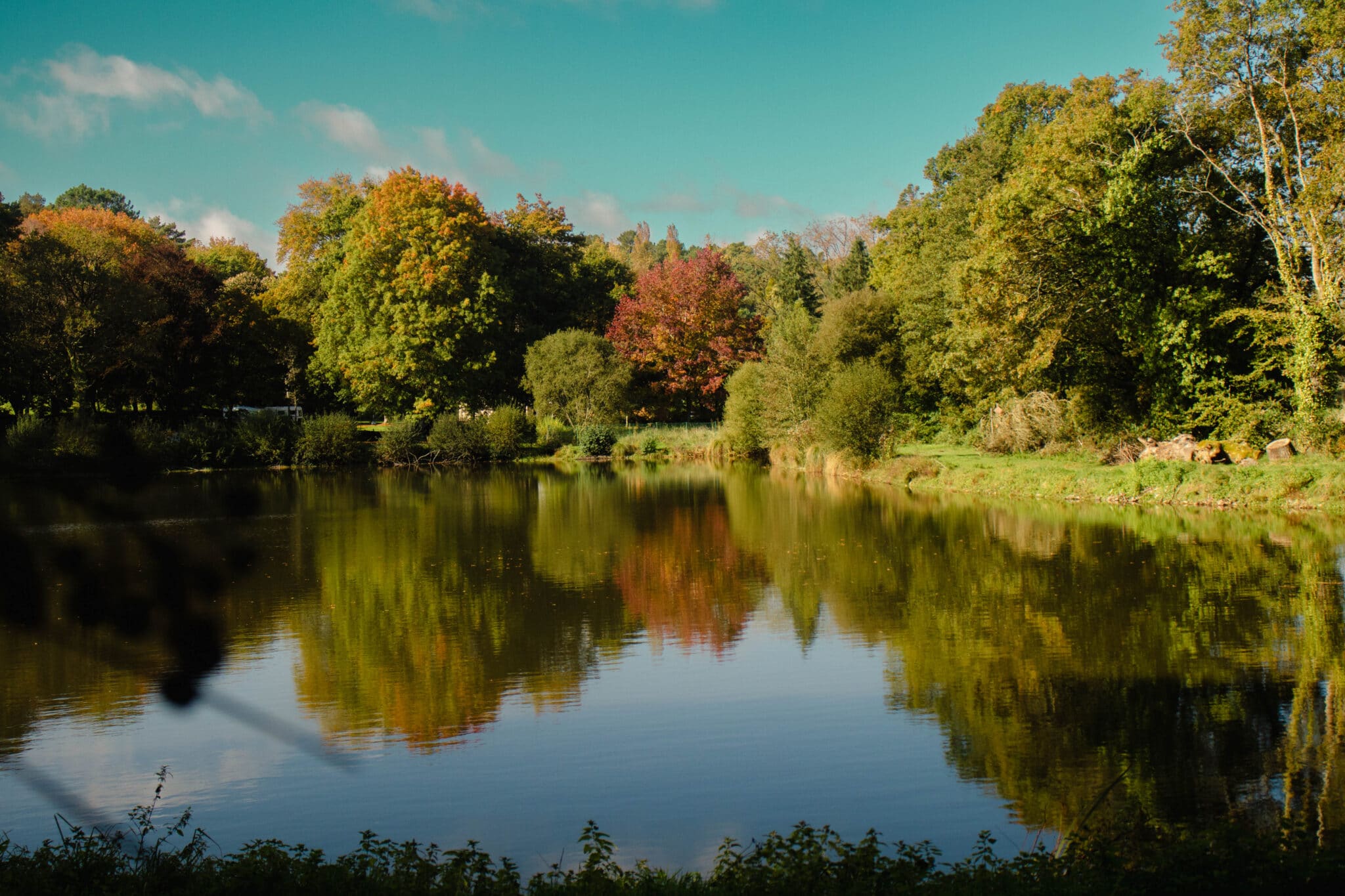
Perched on the heights of the Lanvaux moors, Peillac, an ancient Gallo-Roman town, is now a friendly village proud of its rural heritage and traditions. Before descending to the Pont d’Oust open-air sports and leisure centre, take a stroll through the heart of the village. The paths wind between sculpted calvaries, mysterious Celtic steles and characterful farmhouses, all witnesses to a rich past and an authentically Breton setting. Every turn invites discovery and contemplation, between history, nature and a tranquil atmosphere.
history
& heritage
Peillac has a very long history, dating back to Celtic times, with stelae still visible in the area. In Gallo-Roman times, the village developed around a villa and a Roman road, and the commune’s former name was Pauliac.
Affected by the Wars of Religion, then rebuilt in the 17th century after a fire, the town was reorganized around several administrative buildings and rural manor houses, some of which remain in the landscape today.
- Saint-Sabulin Saint-Pierre church : built of granite and schist in the 17th century, the original church had no transept. It took on its Latin cross shape in the 19th century with the addition of two chapels. Restored several times, it also saw the construction of a new bell tower and the interior refurbishment by local craftsmen in the 19th century, giving it its current appearance.
- Le grand logis : A former seneschal’s house built in the 17th century with a watchtower, the building once served the local royal administration (justice, finance and army). Purchased in the 19th century by a rector, it was then transformed into a girls’ school run by nuns. The nuns lived in the building until 1986, when it was converted into a media library in 1997.
- La chapelle de la congrégation: preserves traditional old slate houses.
- Moulin de Guéveneux: weavers’ workshop housed in a water mill on the River Arz, a DRAC-approved contemporary art site.
- Maubran : The village of Maubran features some remarkable longères and the Notre-Dame de Liesse chapel, rebuilt in the 16th century. The friends of the Maubran chapel have been restoring and maintaining it for decades.


nature
& walks
A number of natural sites and pearls dot the Peillac territory:
- Pont d’Oust site: close to the Nantes-Brest canal, this nautical stopover is close to a campsite and swimming pool open in summer.
- Limur lock: natural site where a lock keeper’s house is located near the Nantes-Brest canal.

traditions
& local life
- The Peillac market takes place on Wednesday mornings in the rue de la mairie.
- Autumn Fruit Festival: 3rd weekend in October. The whole commune gets into the spirit of this popular festival, which mobilizes several hundred volunteers from various associations every year. Concert, fest deiz, sung walk, big market…
- Orange Apple Festival: December, January. For two months, the pomme d’orange (orange apple) festival offers high-quality entertainment throughout the commune. Let’s get out of our houses, let’s get out of our cocoons, let’s put on our jackets and let’s meet up at the show!
- Feu de la Saint-Jean: the Saturday closest to St John’s Day. A time-honored tradition with a bonfire, aperitif concert and fest noz in Peillac.

Did you know?
In Peillac, the story goes that the village was rebuilt in the 17th century… using stones salvaged from the old Château de Cranhac.

access & transport
Car – Bicycle – Bus – Boat
By car 14 km from Redon, by bike via the Vélodyssée / EV1, by bus with the RED network, by boat from the Pont d’Oust nautical stop.

to see, to do
- The congregation’s chapel
- The Pont d’Oust site
- The church
- Maubran
- The Guéveneux mill
- The village
- Activities in Peillac


