The Pays de Redon is a land of contrasts, where history, legends and architectural curiosities combine to create an extraordinary heritage.
Here, every bend in the road can reveal an unexpected surprise, bearing witness to a rich and sometimes mysterious past. Follow us as we explore the unusual heritage of this unique region.
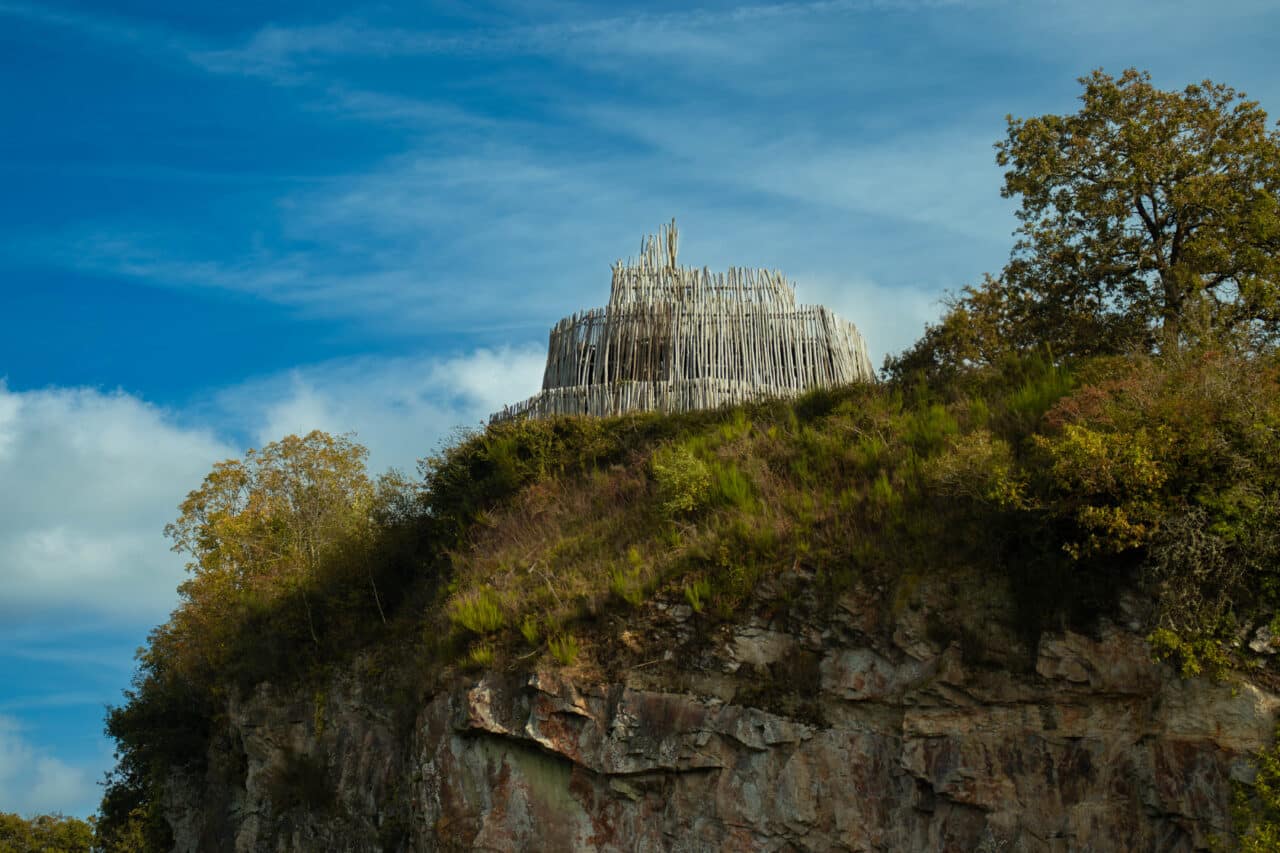
Nicolas Polissky lookout
A former quarry
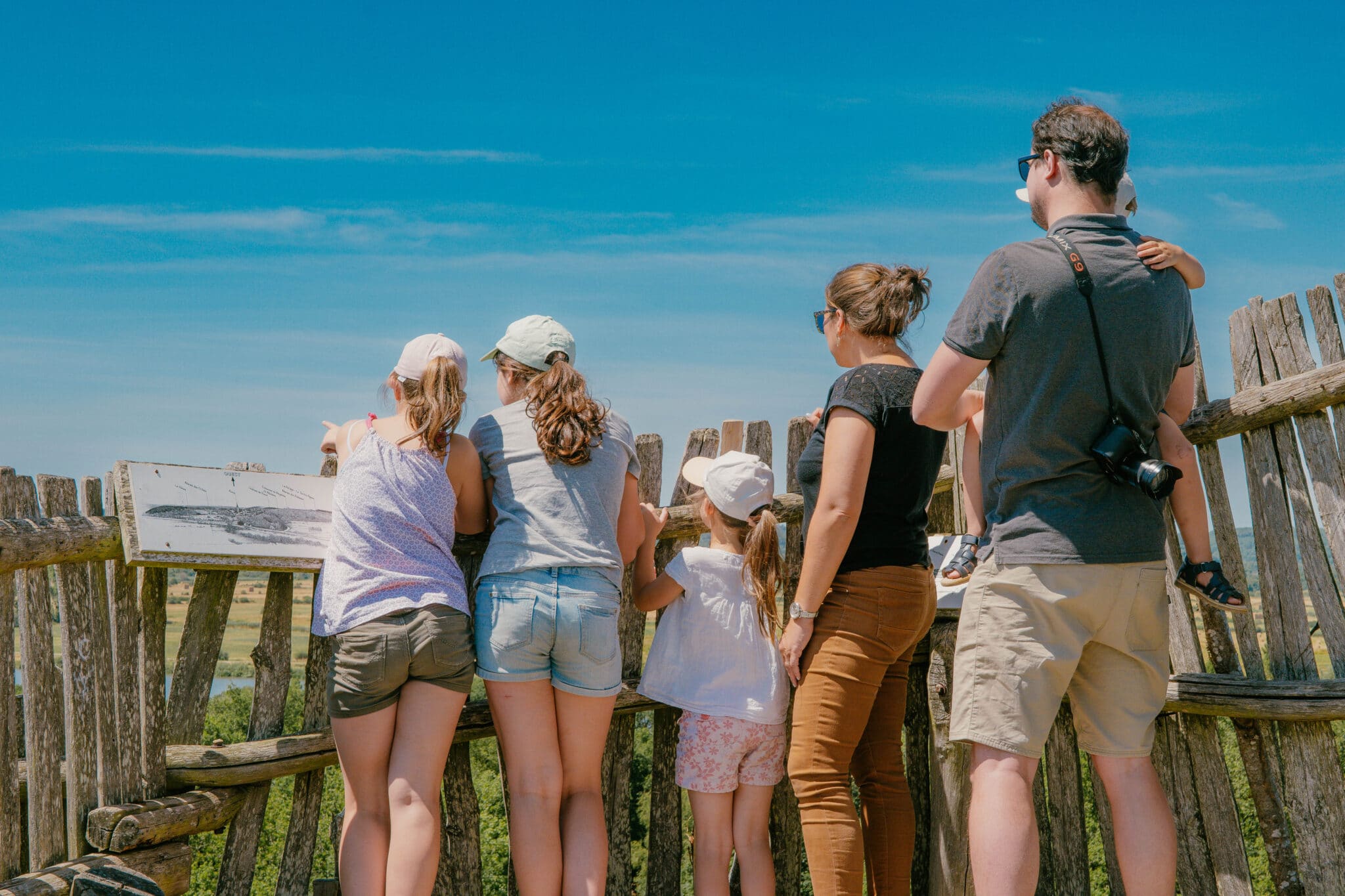
At the heart of the La Carrière au Bellion site, the Nicolas Polissky lookout dominates the valley at a height of 12 m. Designed by Russian artist Nicolas Polissky and built by volunteers in 2009, it offers an exceptional panorama over dozens of kilometers, as far as the seven bell towers of the neighboring villages.
In autumn, the area is transformed by the blazing colors of the foliage, perfect for hiking, photography or a break in the heart of nature. A path accessible to all allows you to admire the view from different angles, and picnic tables invite you to enjoy the landscape in complete tranquillity.

Good to know
The Nicolas Polissky belvedere is one of the fourteen stages on the La Traversée bretonne itinerary, which runs from Mont-Saint-Michel to Nantes. Saddle up for art!
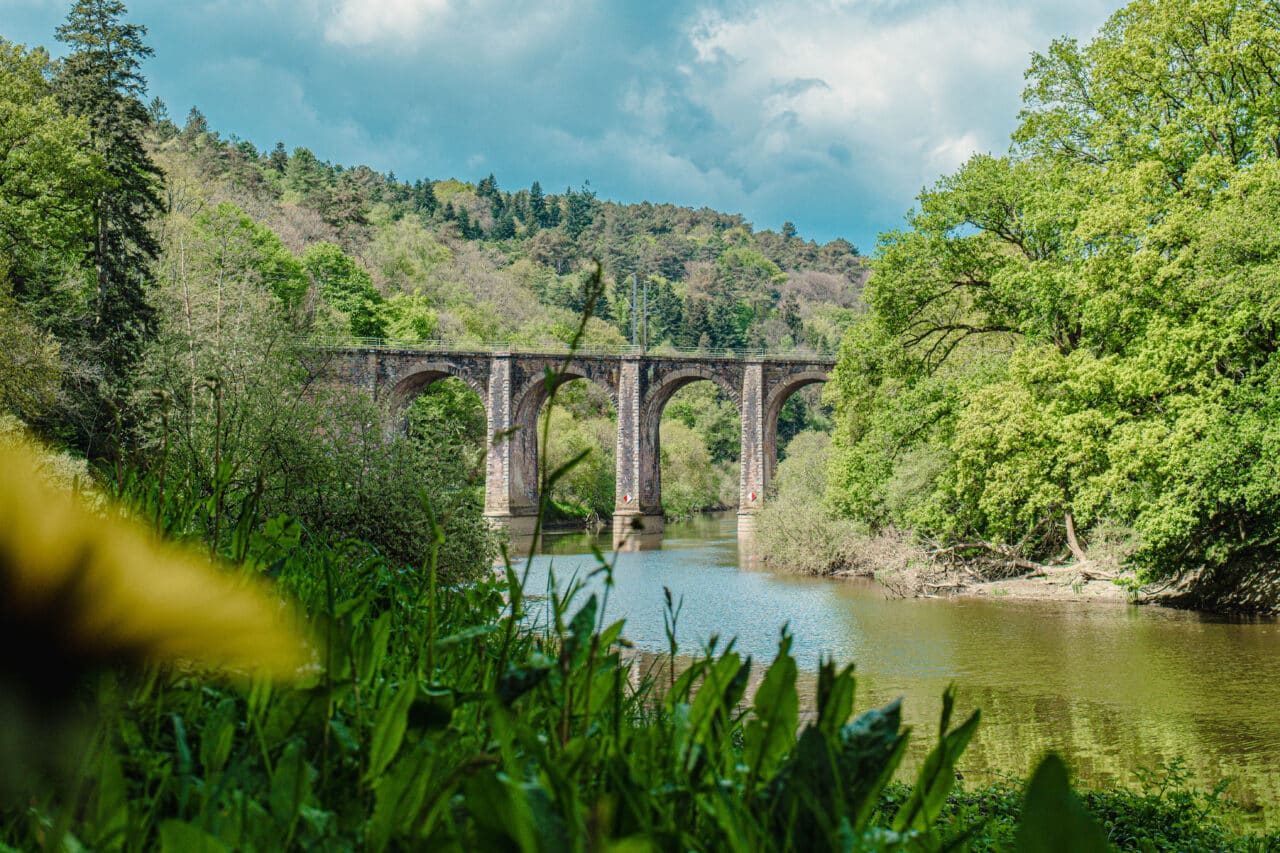
The Corbinières Viaduct
a viaduct in a sea of greenery
Elegantly suspended over the Vilaine River, the Corbinières viaduct, built in the XIXᵉ century, impresses with its height and majestic metal structure. From the surrounding paths, enjoy spectacular views of this industrial monument and the verdant landscapes of the Pays de Redon. Today, it enables travelers to link Redon to Rennes by train and experience a railway epic!
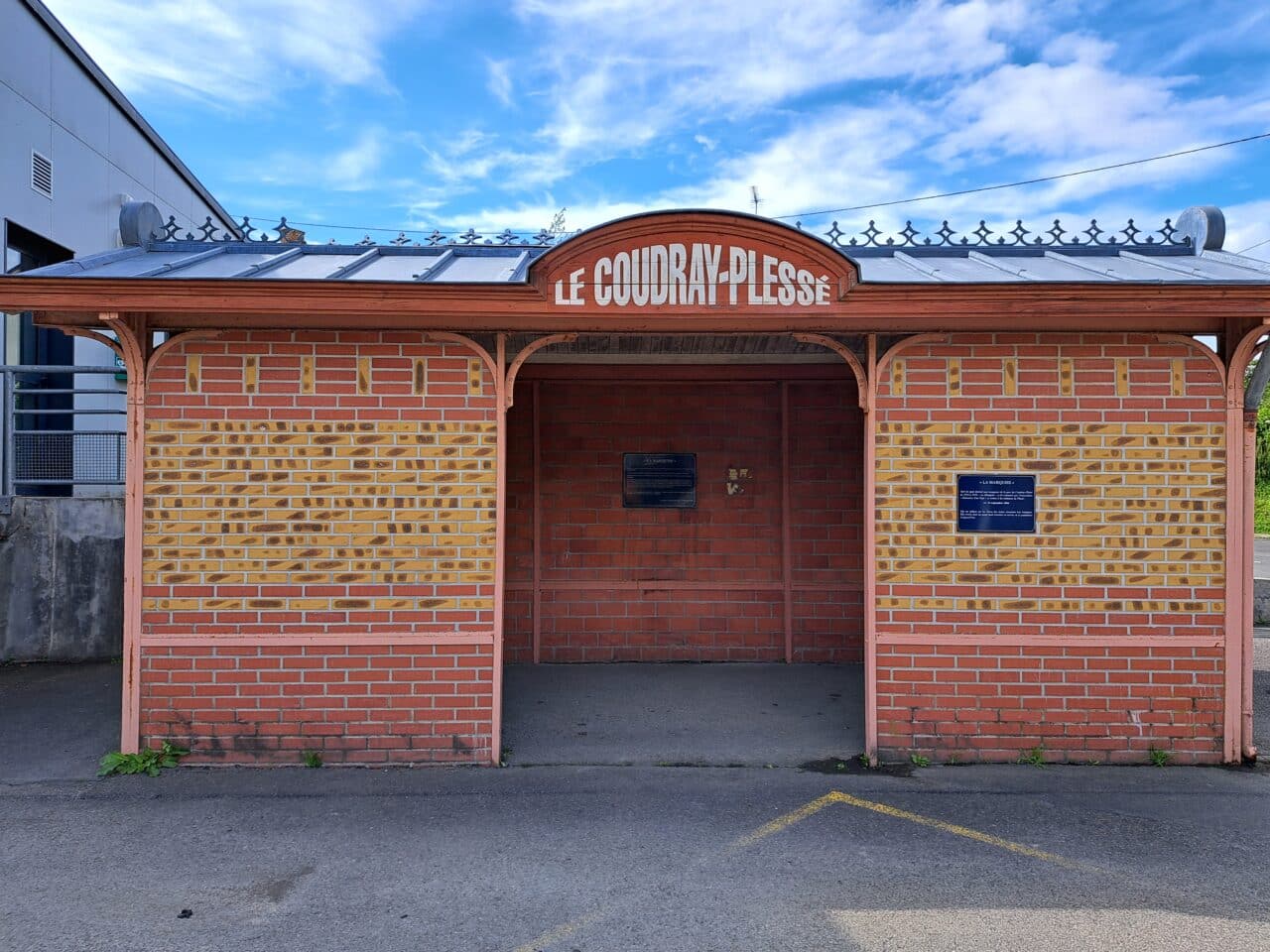
Dock shelter Le Coudray-Plessé
a railway heritage
Used by passengers at the Coudray-Plessé station from 1910 to 1939, the Marquise has been restored by the Mémoires d’un pays association. Today, this former platform shelter, dressed in red and yellow, attracts the attention of passers-by. Discover this unusual site on the 11 km walking tour.
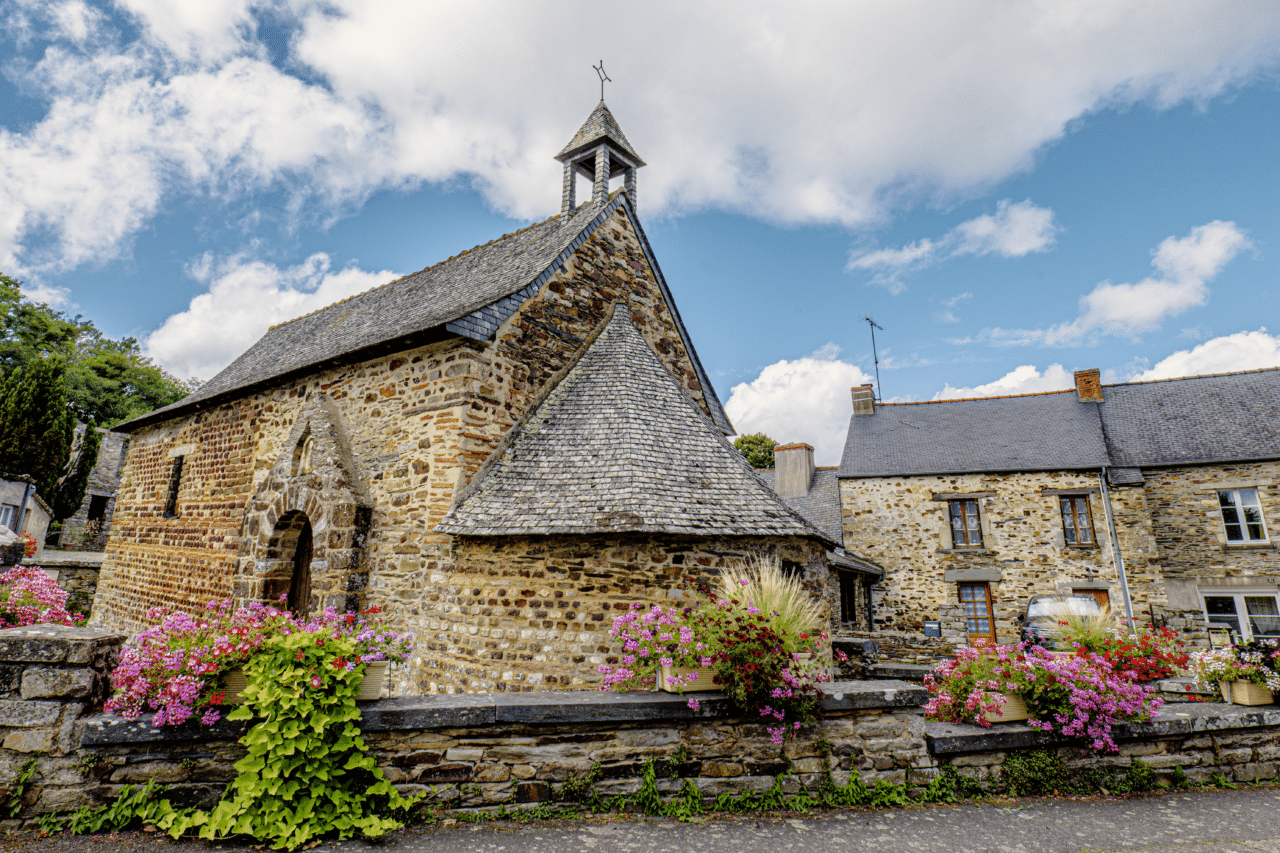
La Chapelle Sainte-Agathe
Gallo-Roman evidence
In the heart of Langonthe Sainte-Agathe chapel tells the story of almost two millennia of history. Dating back to Gallo-Roman times, this edifice has survived the centuries, undergoing transformations that have enriched its architecture.
A place where past and present meet to the delight of history and heritage enthusiasts.
THE Neolithic house
a plunge into the daily life of the first Bretons
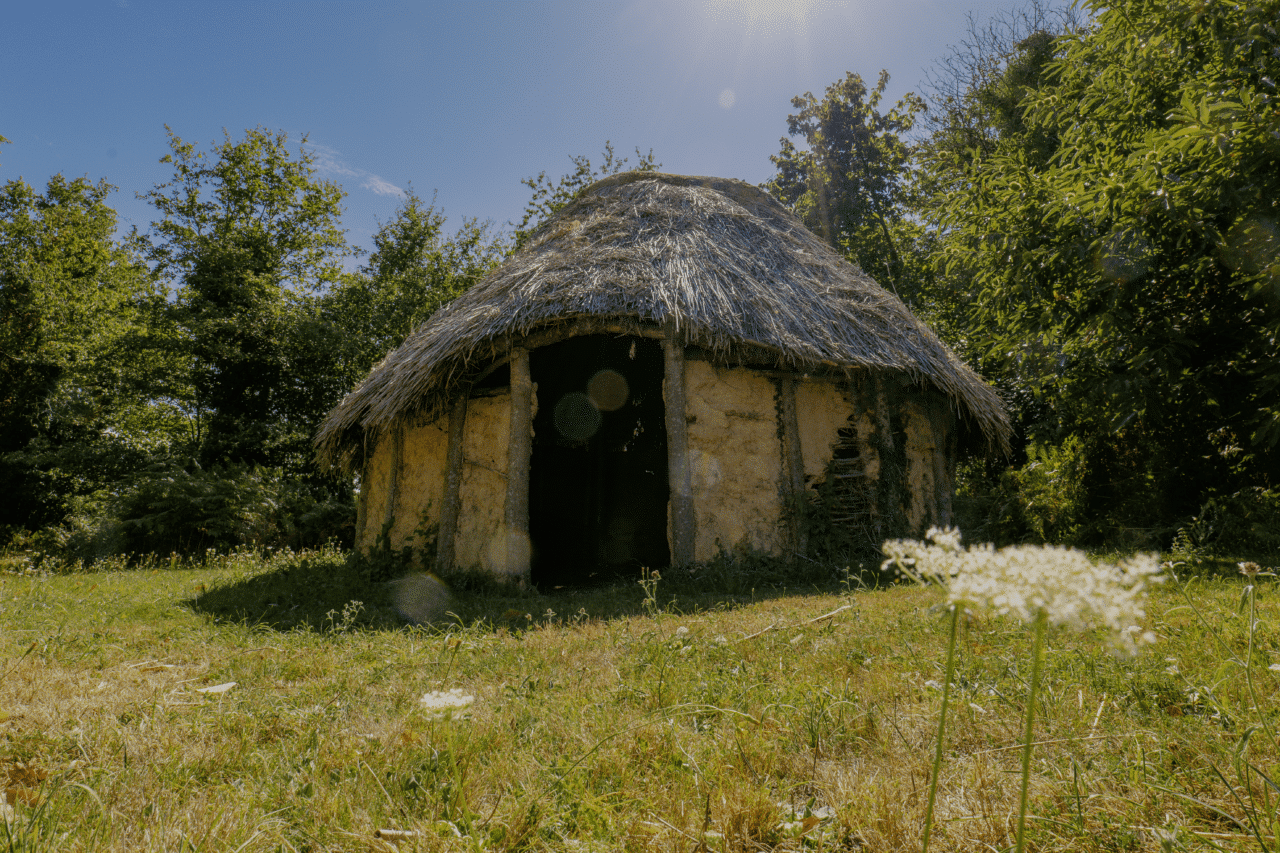
At La Chapelle-de-Brain, the Neolithic house offers a striking reconstruction of the habitat of the first Breton settlers. This interactive site lets you discover construction techniques, everyday objects and lifestyles from over 5,000 years ago. A moving immersion in the origins of human life in Brittany.
Do you know the Maison Mégalithes et Landes?
Le Pont du Grand Pas
An industrial bridge in the middle of nowhere
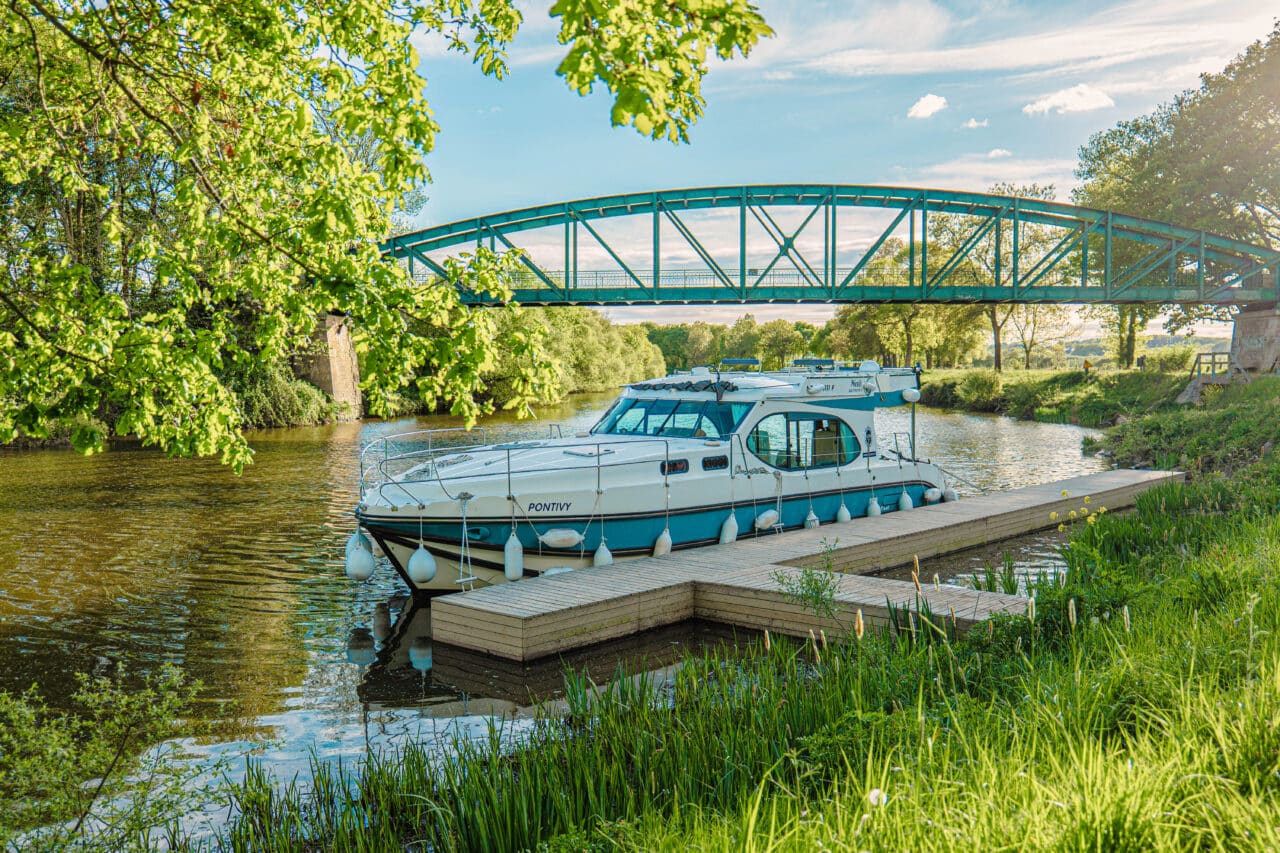
Nestled in the greenery of Sainte-Marie, the Pont du Grand Pas, with its elegant metal and stone structure, links the banks of the banks of the Vilaine in a peaceful, bucolic setting. The bridge is the perfect place for a contemplative stopover, or a break at the guinguette.
Did you know?
Legend has it that it was here that the thirsty Gargantua set foot on either bank to drink from the Vilaine, hence the name Grand-Pas.
Roman roads
paths steeped in history
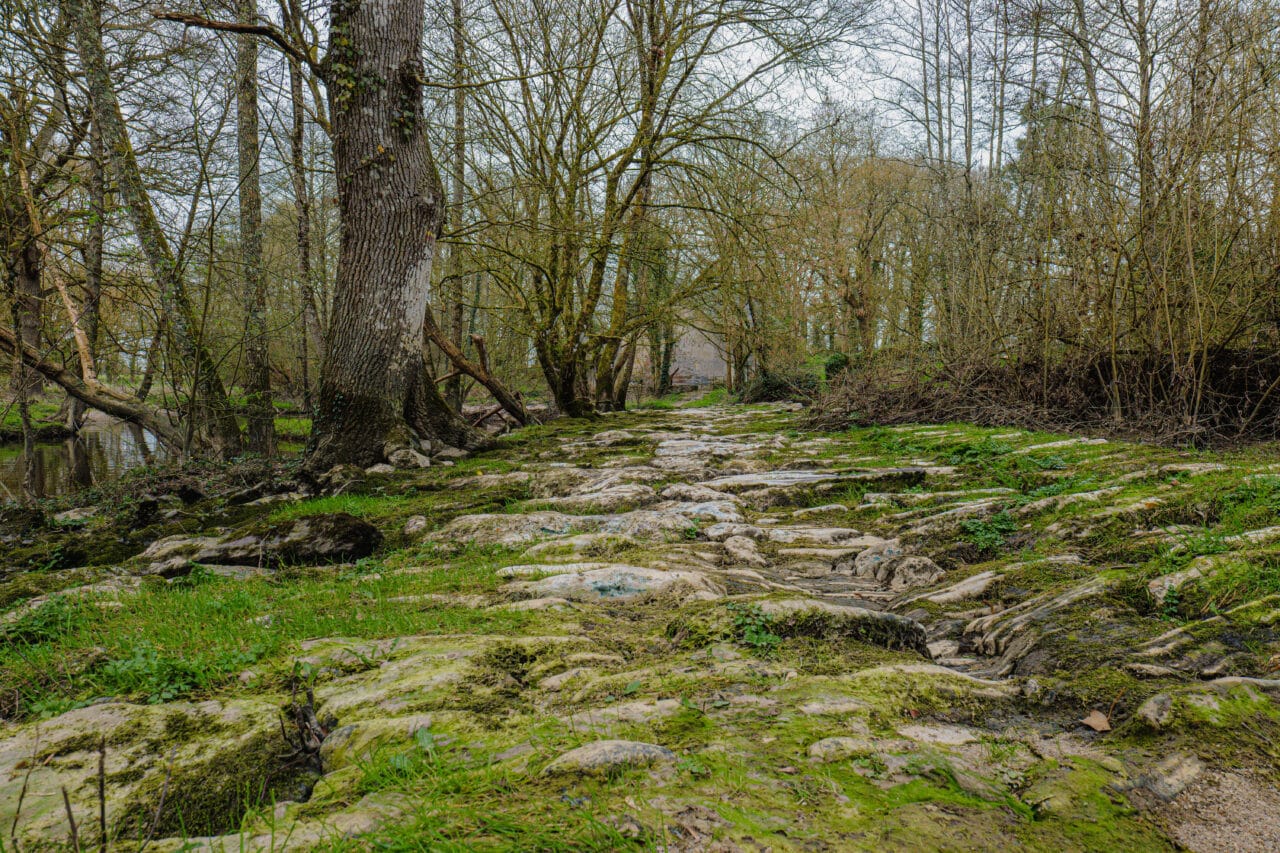
Travel back in time along the Roman roads of the Pays de Redon. À Conquereuilthe Pont-Veix site reveals a remarkably well-preserved section of these ancient roads, now set in a green setting. Another route, also known as the Chemin de la Duchesse Anne, linking Langon and Beslé-sur-Vilaine (Guémené-Penfao), runs alongside the Vilaine, inviting you to take a stroll in a historic and natural setting.
Pas du Saint oratory
the legend of the footprint
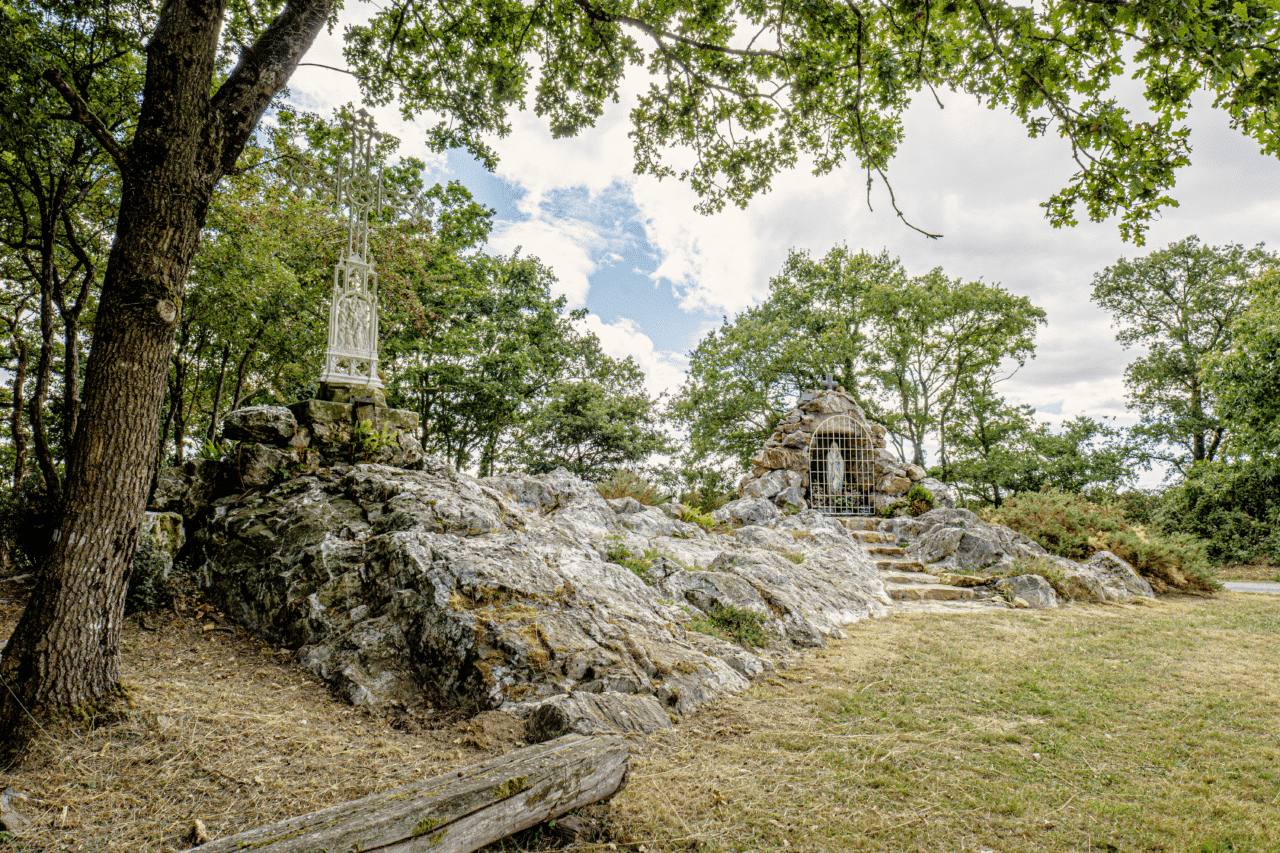
Perched in the countryside of PierricthePas du Saint oratory is intriguing, with its granite ensemble, tin cross and legendary grotto. After exploring this unusual site, continue on to La Buffardais for a panoramic view of the Vilaine River.
Did you know?
The legend of Saint Gwénolé tells how, fleeing the Norman invasions with the saint’s relics, the monks of Landévennec Abbey found themselves thirsty on a rocky knoll. Praying to Saint Gwénolé for help, their superior dismounted from his horse… and his foot sank into the rock. A spring then sprang from the footprint, still visible today, providing the monks with their long-awaited water. So take five minutes to look for this imprint in the stone: a little treasure to discover for yourself!
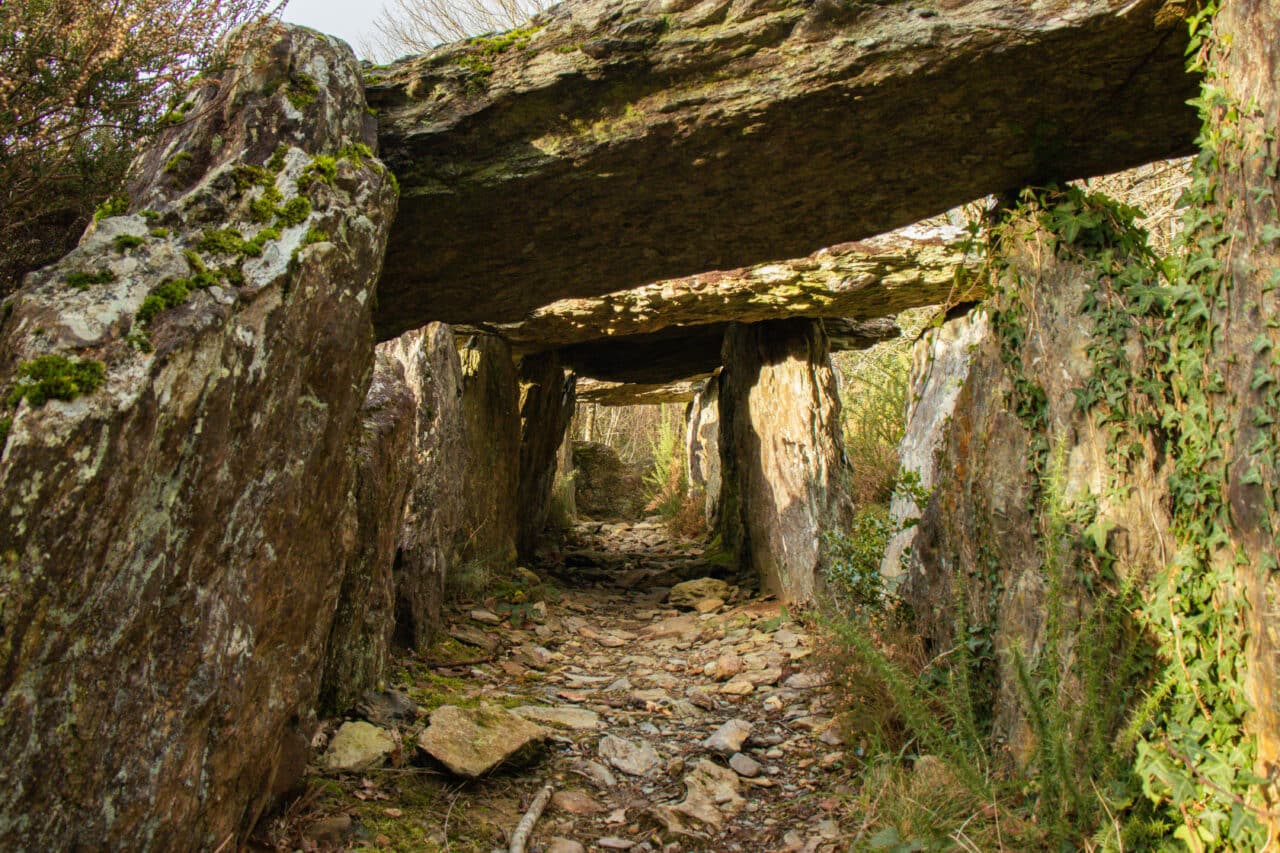
The Tréal dolmen
a stone mystery
Buried among the trees in Saint-Just, not far from the megalithic site, the Dolmen de Tréal, also known as the “covered alley”, is a prehistoric collective tomb with a majestic appearance. Surrounded by towering trees and bathed in natural light, this mysterious site transports visitors back to the Neolithic era. A fascinating stopover for archaeology and nature lovers.

Did you know?
The Jan Brito Workshop: the “Breton Gutenberg” in the spotlight
À Pipriacin Pipriac, north of the Pays de Redon, theJan Brito engraving workshop pays tribute to the famous 15th-century printer nicknamed the “Breton Gutenberg”. The museum dedicated to this craftsman offers a fascinating insight into the world of printing, accompanied by interactive workshops.